Appearing in the Alarm one month after the execution of Joe Hill, the following tract is Aron Baron’s call to the anarchist milieu of his time to reaffirm an anti-state principle in the face of ruthless state repression. In light of our current deluge of federal terrorism charges, and what feels like a relinquishing of even basic anarchist principles for a reliance on the logic of the law, it’s important that we recover examples of true hostility toward and refusal of the illusions of that logic throughout anarchist history. What’s most deserving of our attention in Baron’s text is his direct admonishment of the still common urge for anarchists to fall back into legalistic assumptions, whether through declarations of innocence or by pleas to the conscience of the state. “You say you have committed no crime? You don’t have to! If you are known as a man of deep devotion to the Cause of the Workers, never mind about a charge: any shrewd attorney will find one against you, just as they did for Joe Hill.” It must be understood that we are an excessive fringe in the eyes of our declared enemy and will not be spared any mercy by a political apparatus we claim to want to destroy, that will preserve itself by any means at it’s disposal. Repression (the most extreme expression of the law) is the state finding ballast, keeping itself from tipping too far in any direction. It’s not a matter of preference for one ideological camp or another, but rather casting the excess fringes into the shadows of prison or death in order to sustain a project of domination. Despite whatever Manichean justifications are claimed by those that enshrine and enforce the law, the state is not a thinking thing. It’s a dynamic relationship between those that wish to accumulate, wield and weaponize power over a territory and everything in it, including those without the ability (or desire) to engage with that power on an equal basis. Repression is a bonded feature of the life of anyone in true opposition to the existent, no matter it’s shape. It’s to those that accept that fact and still wade into action that we extend our utmost solidarity.Photographs and text hijacked from theKate Sharpley Library. – SM
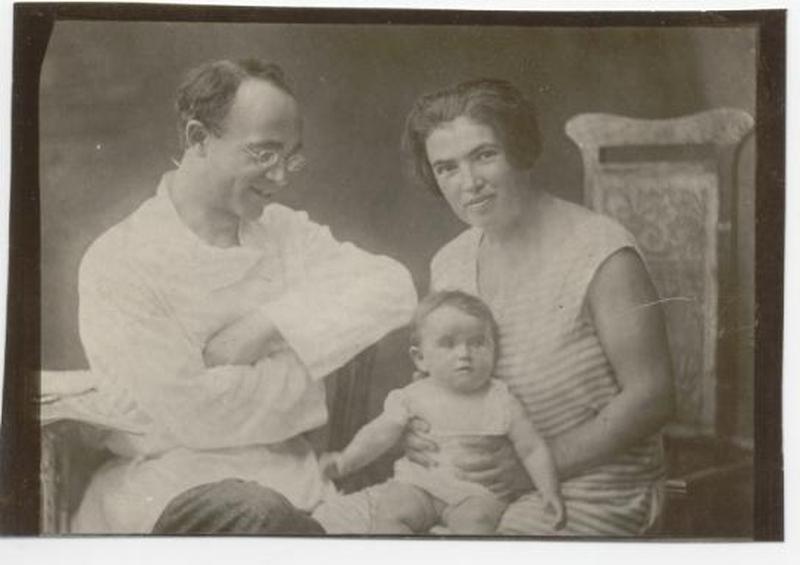
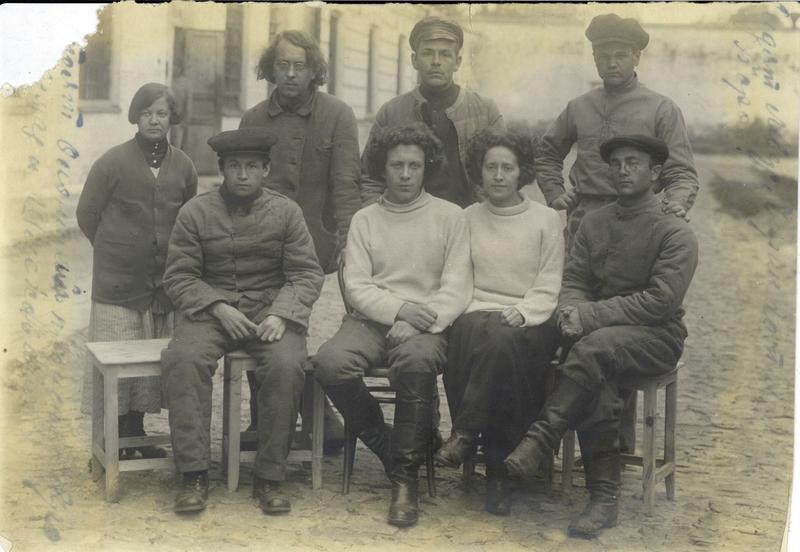
Aron Baron, Fanya Baron and their daughter VoltairinaAron, Fanya, and other Nabat anarchists imprisoned in Kharkov, 1922
Mere Barking Wont Do
Aron Davidovich Baron
Petitions, protests, resolutions, hundreds of thousands of them – all in vain! The masters are triumphant: Joe Hill is shot, murdered, dead.
What now? What next? Not only what, but who is next? You and I, who are striving for a better world, we may be next tomorrow. You who have a vision of a society without masters, and are spreading your ideal, among the oppressed and exploited, tomorrow you may be led to the scaffold. Why not? You say you have committed no crime? You don’t have to! If you are known as a man of deep devotion to the Cause of the Workers, never mind about a charge: any shrewd attorney will find one against you, just as they did for Joe Hill. That’s what they have done 28 years ago to Parsons and his comrades, that’s what they have tried to do to Haywood, Moyer and Pettibone, to Ettor and Giovanitti, to Ford and Suhr in California, Rangel and Clines in Texas, that’s what they are trying to do right now to Schmidt and Caplan in Los Angeles.
And what are you going to do? Again protest? O, yes, in this “free” democratic country you have freedom of speech: talk! Talk your head off – who cares? A lot you care when you hear a hungry dog barking? That’s just the attitude of the masters towards us: Bark! a lot they care!
Fellow-workers and comrades! All of you to whom the existing conditions are repugnant, and all of you who find a Free Society worth fighting for, – let us profit by the death and torture of our martyrs in realizing once for all that
Mere barking won’t do!
We must learn to bite, and bite effectively!
A. Barron.
[Baron returned to Russia in 1917 and was active until he was shot in 1937.]
From: The Alarm, Chicago. Vol. 1, no. 3 December 1915.
This project has been struck by a type of paralytic writers block. Cruelly ironic as the intent was to hopefully arrive at any sort of clarity through writing and experimentation, but the last several months have presented nothing fruitful. In the meantime, aside from scouring ancient Italian language newspapers, there have been some actually positive excursions back into the heyday of Stateside insurrectionary anarchist writings (KKA and WD, in particular) to see if anything from that period could be salvaged and brought into the present. As mildly outdated as some of that has become, certain conversations around the anti-globalization movement to be precise, Wolfi/Apio/Feral Faun’s personal writings are almost perennial despite his own abandonment of the social field, as they exemplify the necessity of the anarchist imagination in the face of our daunting task, an imagination that feels nearly absent among those surrendering to the limiting pragmatism of reformist activism and radical charity. PDF’s of WD’s full run as well as numerous other pamphlets from Venomous Butterfly Publications can be found here. – SM
THE REVOLUTIONARY WAGER
The world has to change now; if it doesn’t we’ll all die as exiles in an inhuman world.
We are living in desperate times. The capacity to dream and desire appears to be depleted. Most people merely seem to resign themselves to what is. It is, therefore, not surprising that even some anarchists are turning to apocalyptic visions of “the end” rather than pursuing projects of revolutionary transformation – projects which require a capacity both to dream and desire and to look at the world as it is in terms of how to go about realizing those dreams and desires. I have recently heard certain anarchists declare that revolutionary projects are “unrealistic” and that people should instead prepare for an inevitable collapse of civilization. The determinism inherent in this view may give those who hold it a kind of hope, but it is a sad hope, lacking joy. The joylessness of this perspective stems from the fact that those who hold it are placing their bet on an apocalyptic event that is beyond their control rather than on their own capacity to act and interact, to join together with others to create a rupture with the present. Some of those who hold to this perspective advocate acting to speed up the collapse, thus supporting a kind of violence against the civilized order. But in rejecting the possibility of a revolutionary project, they remove the acts of violence they advocate from any social context. And this is where the sadness of this perspective manifests. The rejection of the possibility of revolution is the rejection of the dream of consciously creating life together in a different manner (except maybe among a small group of friends). The advocates of this apocalyptic gospel no longer recognize the social wealth that exists in other human beings, a wealth that is beyond measure, beyond calculation, because it is precisely in the relationships we develop with other human beings that we create our own unique and boundless individuality. Having lost the social, human aspect, the attacks they conceive to speed up the collapse degenerate into mere revenge against this society or expressions of moral superiority. Calculating, militaristic thinking begins to infect their activity with conceptions of “acceptable loss” and comparative body counts. But the reality of a world that seems to be perpetually on the edge of catastrophe is perceived more clearly by others, not in terms of apocalyptic hope, but rather of increasing fear that soon all may be lost. Fear and despair seem to be the dominant feelings of these times. This is no accident. Those who rule this world find their most useful weapon in fear and the paralysis of despair. But only in those places and times where the catastrophic explodes forth in specific disasters – wars, epidemics, environmental devastation, slaughters, etc. – does this take the form of explicit terror. Far more often, at least here in the Western world, it takes the form of resignation and an underlying dread that eats away at the most sensitive minds. Those who cannot or will not embrace religion, patriotism, apocalyptic hope or any other ideology to gain the illusion of security can be driven to the edge of madness by this dread, making the horrors of this world personal. The sufferings in the Sudan or Iraq or Palestine find their reflection in the emotional suffering of people that I love. What I see collapsing around me is not the civilized social order, but the dreams, the courage and the minds of my friends. But both hope in a collapse and despair in the face of the present catastrophic reality involve looking at the present world on its terms, not on our own. Those who hold to either perspective have already assumed their own incapacity to act effectively in the world to realize their own desires and dreams. They, therefore, look at the realities of the world not as challenges to be faced and overcome, but as inevitabilities that must be endured. What is missing is the reversal of perspective referred to by Vaneigem, the individual insurrection that is the first step toward social insurrection. To take this step, it is necessary to have the courage to wager on ourselves and our ability to act, on our own when necessary, and together with others whenever possible. Those of us who desire the end to all forms of domination and exploitation have every reason to wager our lives on the possibility of social revolution – not as a cause above us, but as something desirable and necessary if we are ever to be able to grasp our lives as our own, as something that we create together with others in the way we desire. There are several levels on which the desirability and necessity of social revolution exist. First of all, the social relationships of domination and submission, of exploitation, dispossession and exclusion that are imposed on us leave their scars. Even if it were true that a collapse of civilization was inevitable, if a radical transformation of the ways we relate on the broad social level did not occur, we would simply begin to recreate the old hierarchies and institutions most likely in their ugliest forms. If anyone thinks otherwise, they should look at a few of the places where collapse has occurred on a regional level, such as the Balkans, Rwanda, Somalia or Chechnya. Furthermore, beginning to act towards social revolution in our lives means beginning to change the way we relate with each other and with the world here and now. Our project becomes the exploration of new ways of being in the world based on affinity and the interweaving of our desires, our dreams, our projects and our lives. And that in itself can make life much more enjoyable. In addition, there are places in the world – such as West Papua, Algeria and Latin America – where resistance and revolt are ongoing but where the interests of the West play a major role in keeping these revolts on the defensive. We can talk all we want of solidarity, but if we are not rising up here, where we are, against the powers that condemn us to lives of obedience and that are destroying the ways of lives of people over there, this is just a lot of chatter. Real solidarity exists in the interweaving of our own revolt with that of those in revolt elsewhere, because the same institutions, the same powers, that impoverish our existence are also destroying the way of life of the indigenous people of West Papua, supporting the police terror in Algeria and promoting their own agenda of exploitation and control in Latin America, so our revolutionary battle for our own liberation is the most useful form of solidarity. And perhaps most importantly, staking our lives on the project of creating social revolution, means wagering on our own capacity to act. Thus, we actually can take some responsibility for the outcome of this wager. Once a person has made the decision to take her life into her own hands against the ruling order and to begin a project aimed at a revolutionary break with the existence it imposes, he has already changed the way he relates to the world around him. This becomes evident in the way she views this reality. If we want to battle against the ruling order and begin to create a terrain of liberation, we have to understand the terrain of domination, the terrain of capital and the state, as well as that of resistance and revolt. We need to know what forces are at play in the field of social struggle. Without this knowledge, our ideas and dreams have no place to gain footing for actually doing battle with the ruling order, and it is easy to drift into ideology and become irrelevant. But we grasp this knowledge as a weapon to wield against the ruling order so that we can realize our dreams of a new world. Let’s consider a bit more deeply what this means in order to avoid confusion. Social revolution is the overturning of the social relationships of domination and exploitation in order to open the possibility for creating our lives together on our own terms. This is a destructive project – an attack against the institutions and structures of the ruling order aimed at their complete demolition. But it is also a project of social transformation. If the destructive project does not also carry this transformation within itself, then we will tend to reproduce the very relationships we are out to destroy in the way we carry out our activity. And attempts to transform social relationships that are not also aimed at the destruction of the present social order tend to fall into a reformist logic centered around identity politics and the struggle for equality within the institutional structures or else into pure subcultural escapism. So the destructive and transformative aspects of the project cannot be separated; they are in fact one. So I feel that the revolutionary project requires the means by which we go about this project to carry our ends within them, so that we don’t reproduce the social relationships that we are trying to destroy. I have heard one argument against this that claims that we can never know the consequences of our actions with certainty. We cannot know that such means will bring about our ends. No determining law of cause and effect exists to guarantee this. This is true enough; we cannot know with certainty that any of our projects will succeed whatever method we may use. If we could, there would be no wager, just the smug certainty of those who know the true path. But a lack of certainty about the outcome of this method is no real argument against choosing to use means that carry our ends within them, because my dreams of a radically transformed world are not dreams for a far distant future where I will no longer exist. They are my desires for this moment, for my life here and now. And this is the most significant reason why my ends must exist within my means. It is the only way to guarantee that on some level I will begin to realize my dreams in my own life. Social reality cannot be ignored; it must be destroyed. The destruction of class society, and of the race, gender and other identity roles it imposes, does not come about be simply ignoring class, race, gender, etc. Rather it is necessary to fiercely confront them with our dreams, to wrestle with them in terms of the world we desire. This is not a matter of dealing with “privilege” as that word is generally used these days among certain so-called anarchists, with its moralistic and self-sacrificial connotations, but of fighting actively against roles and identities that have been imposed on us in such a way as to make the interweaving of our struggle more difficult. This battle requires us to try to understand the different ways in which each of us has experienced dispossession, domination and exploitation. And this is a further reason for seeking to understand the realities that surround us. Certainly, in order to be able to experiment with the transformation of social relationships, we need to steal back some space from the terrain of domination in order to create a terrain of liberation. In this sense, what some people have said about creating a “counterculture” makes some sense, if by counterculture they mean a way of living against the ruling order, a sustained attack against civilization. But in order to be such an attack, this counterculture cannot be a culture set apart in its own little world. Otherwise it is nothing but another form of escape, perhaps less stultifying than TV and video games and less harmful than alcoholism and heroin, but still of little use in the project of destroying the present social order and transforming social relationships. The struggle against this world requires that we find our accomplices wherever the dispossessed, the exploited, the excluded and those who are simply disgusted and enraged with life as it is are beginning to rebel. And this means refusing to isolate ourselves in our scenes and enclaves. The world as it is today can seem overwhelming. The idea that revolution is “unrealistic” is not an illogical conclusion, but regardless of the fierceness of the rhetoric of those who assume this, it indicates a surrender to the present reality. No matter how we choose to encounter the world, we are taking a gamble. There are no certainties, and for me this is part of the joy of life. It means that I can make choices on how I will act and that I can base those choices on my own desires. I desire a world in which the relationships between people are determined by those involved in terms of their needs, desires and aspirations. I desire a world in which every system of domination, every form of exploitation, all forms of rule and submission have ceased to exist. If I lay my wager against revolution, I am bound to lose. If instead I stake my life on immediately rebelling against the ruling order with the aim of social insurrection and revolutionary transformation, there is a possibility that I may win in the long run, and in the short run I will definitely win, because I will have made so much of my life my own against the ruling order that I will have actually lived, vibrantly in rage and joy.
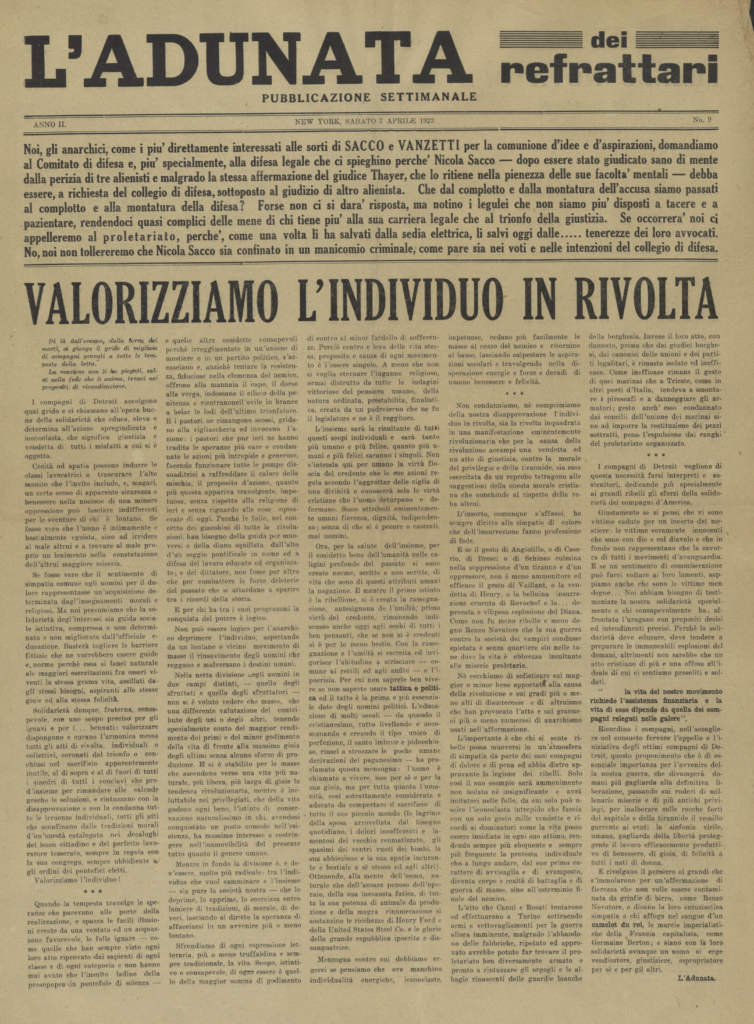
The following is a *very rough* machine translation of a 1923 text that appeared on the front page of Italian language newspaper L’Adunata dei refrattari, from which this project proudly cribs it’s name. In a time of anarchy’s continued regression towards liberal reform, it’s of the utmost importance to revisit and recall the more subversive words and ideas from lifelong anarchists in revolt. The editors and contributors to this paper emerged from the various circles of individualist and communist anarchists often regarded as the Galleanisti, namely Raffaele Schiavina and Osvaldo Maraviglia (both of whom participated in Galleani’s paper Cronaca sovversiva), and it’s within the lineage of this disparate group of uncontrollables that the Refractories project places itself. Links to PDFs of L’Adunata’s 1922-1971 run can be found here. – SM
Osvaldo Maraviglia and Raffaele Schiavina
We Valorize The Individual In Revolt
From beyond the ocean, from the land of the dead, comes the cry of thousands of comrades tested by all the storms of struggle. The reaction has not broken them, firm in the faith that animates them, tenacious in their purpose of vindication.
The comrades of Detroit welcome this cry and call us to the good work of solidarity that educates, elevates, and leads to unscrupulous iconoclastic action, which means justice revenge for all the misdeeds to which we have been subjected. Blindness or apathy may lead the working classes to disregard the profound warning that this call entails; indeed, a certain sense of apparent security and well-being—derived from the notion of diminished oppression—may leave them indifferent to the misfortunes of those far away. This would be true if man were, at his core, so beastially selfish as to mock the suffering of others, and to find solace for his own ills in the mere observation of another’s even greater misery. If it were true that the feeling of sympathy common to men for pain represented an acquisition determined by moral and religious teachings. But we presume that solidarity of interests is an instinctive social guide, compressed and not determined and improved by official education. It will be enough to remove the fictitious barriers that pretend to be its guides and norms, for it to naturally launch itself into the greatest exertions among beings living the same miserable life, beset by the same needs, aspiring to the same joys and the same happiness. Solidarity, therefore, fraternal, conscious, with a precise purpose for the lazy and the… well-born: to valorize, organize, and care for the harmonious balance of all acts of revolt, individual or collective, crowned with triumph or concluded in seemingly useless sacrifice, above and beyond all the Sanhedrin of all the confederates that preempt together to postpone solutions to the Greek calends, and blunt with disapproval and condemnation all individual impetuosity, all acts that transgress the moral traditions of an honesty catalogued in the Decalogues of the good citizen and the perfect card-carrying worker, always in good standing with his congregation, always obedient to the orders of the elected pontiffs. Let us valorize the individual!
• • •
When the storm overwhelms the hopes that seemed on the threshold of realization, and sweeps away the facile illusions created by a favorable gust and downpour, the ignorant crowds — like those who have always seen their every act rebuked by the wise of every class and every category and have never received anything but the Ladin insult of pomposity in the slippers of science— and those others, so-called aware because they are regimented in a trade union or a political party, collapse and, rather than attempt resistance, confident in the enemy’s elementality, they offer their heads to the axe, their backs to the rod, don the hairshirt of penance and return to the fold in a herd to bleat the praises of the last victor.And the shepherds are shaken by this, cry out for cowardice and call for action: the shepherds who only yesterday betrayed their dearest hopes and condemned the most intrepid and generous actions, turning on all the deterrent pumps to cool the heat of the fray, the intention of action, the more it seemed overwhelming, impetuous, without respect for the religion of yesterday and without regard for the consecrated things of today. Because the crowds, in the view of the Jacobins of all revolutions, need a guide to move and the dirge sounded from the heights of a pontifical throne in the name and in defense of educated and organized labor; and of a dictator, if only to combat the deleterious forces of the past that linger, disappearing among the memories of history. And for those who have the conquest of power among their plans, it is logical. It cannot be logical for the anarchist to depress the individual, expecting from a distant or near-future mass movement the recovery of the men who govern and misuse human destinies. In the clear division of men into two distinct camps—that of the exploited and that of the exploiters—we have sought only masses, and only a different assessment of the contribution of one or the other, taking into account especially the greater productivity of the former and the lesser enjoyment of life compared to the greater joy of the latter, without any effort at production. And the revolutionary tendency has been established for the masses who ascend toward a more natural, freer, and more joyous life, while the instinct for self-preservation, most natural in those who, having “earned themselves a comfortable place in existence,” have the greatest interest in forcing the entire human race into the immovability of the present. While ultimately the division is, and must be, much more radical: between the individual who wants to move forward and the whole —even our society—that depresses him, oppresses him, coerces him within barriers of traditions, morals, and duties, leaving law with the hope of emerging in a more or less distant future. Let us strip life of every literary expression, more or less fraudulent and always traditional. The goal, instinctive or conscious, of every being is the greatest amount of enjoyment against the least burden of suffering. Therefore, the center and lever of life itself, the purpose and cause of every movement, is the individual being. Unless, of course, we wish to perpetuate the religious deception, now destroyed by all the victorious investigations of human thought, of an ordered, pre-established, purposeful nature, created by an Eternal Father who was its legislator and is its ruler. The whole will be the result of all these individual goals and will be all the more humane and happier, the more humane and happier the individuals are. By “human” we do not mean the flaccid virtue of the believer, whose actions are governed by the frown of a divinity, and who will know only the Christian virtues that man disfigures and deforms. Pride, dignity, and independence are eminently human attributes; without these, one is a sheep or a castrated animal, never a man. Now, for the health of the whole, for the so-called good of humanity, in the deep mists of the past, strict and unwritten rules of life have been created that negate these human attributes. And while the first instinct is rebellion, resignation has emerged, the forerunner of humility, the primary virtue of the believer, and it remains unquestioned even today in the eyes of all right-thinking people that if one is not a believer, one is at the very least a beast. With resignation and humility, the habit of crawling—common to reptiles and amphibians—and hypocrisy are exercised and strengthened. Therefore, you will not know how to live well if you do not know how to use tactics and politics, and tact is the first and most essential quality of politicians. The education of many centuries—since Christianity, by leveling and uniting everything and creating the single type of perfection, the holy, imbued and lousy, managed to strangle the few human derivations of paganism—has proclaimed this lie: man is called to live, not for himself and for his joy, but for all humanity, so abstractly considered and adored as to involve the sacrifice of his entire little world (the tears of the wife tormented by daily needs, the intolerant and complaining pains of the rheumatic old man, the spasms of the empty bellies of children, his abjection and his careless and bestial apathy towards himself and others). It is natural to the human mind that the laborious panting of the worker, his tireless toil, all his power as a production animal and his meager renumeration should be used to create the riches of Henry Ford and the United States Steel Co. and the glories of the great hypocritical and blood-draining republic. A lie we must rise up against if we think that where energetic, iconoclastic, impetuous individuals remain, the masses will more easily yield to the enemy’s assault and return to the lower realms, allowing age-old aspirations to be trampled upon and overwhelming energies, strengths, and decades of human well-being and happiness into despair.
• • •
We neither condemn nor disapprove of the individual in revolt, whether the revolt is part of an eminently revolutionary demonstration that, for the cause of the revolution, seeks vengeance and an act of justice against the morality of privilege and tyranny, or whether it is carried out by a reprobate unmoved by the suggestions of honest Christian morality that concludes with respect for the property of others. The insurgent, however he presents himself, always has the right to the sympathy of those who profess faith in the insurrection. And if the gesture of Angiolillo, or of Caserio, of Bresci or of Schinas culminates in the suppression of a tyrant and an oppressor, the gesture of Vaillant, or the revenge of Henry, or the bloody and brutal insurrection of Ravachol and the… deprecated and vilified explosion of the Diana are no less warning and effective. Just as Renzo Novatore was no less rebellious and worthy, he waged his war against the vampire society ruthlessly and mercilessly even into the dens where life is an insulting intoxication to the miseries of the proletariat. Nor do we try to quibble over the greater or lesser good contributed to the cause of the revolution and the more or less high degrees of disinterestedness and altruism that provoked the act and the more or less numerous grains of anarchism used in the affirmation. The important thing is that those who feel rebellious can move in an atmosphere of sympathy from their companions in pain and suffering, and have the legion of rebels behind them in approval. Only in this way will their example be a warning, neither isolated nor insignificant, and will they find imitators in the crowds, from which alone can emerge the intrepid iconoclast who, with a single gesture, can exact a thousand vengeances and remind the rulers how life can be threatened at every moment, making individual protest ever more eloquent and ever more frequent. Over time, from its initial character as a warning and outpost, it becomes the body and reality of battle and mass warfare, until the final extermination of the enemy. The act that Canui and Rosati attempted and carried out in Turin, stealing weapons and supplies for the then imminent war, despite the factories being abandoned, had it been repeated and approved, could have left the proletariat much better armed and ready to blunt the resurgent pride and arrogance of the bourgeois White Guards. Instead, their act, condemned not only by bourgeois judges but also by the canons of the legalistic unions and parties, remained isolated and ineffective. Likewise, the gesture of those sailors in Trieste, as in other Italian ports, who attempted to dismantle steamships and harm the shipowners, remains ineffective; this act was also condemned by the councils of the sailors’ unions, to the point of requiring the return of the stolen pieces, under penalty of expulsion from the ranks of the organized proletariat.
• • •
The comrades of Detroit want to be interpreters and supporters of this necessity, dedicating the efforts of solidarity of the comrades of America more especially to the great rebels. Rightly so, if one considers that there are victims who have fallen due to a professional error: the truly innocent victims who are with God and the devil and who ultimately represent nothing more than the dead weight of all avant-garde movements. And if a feeling of commiseration can lead us to listen to their laments, we also know that they are the least worthy victims… We need to demonstrate our solidarity, especially with those who have consciously faced the hurricane with decisive intentions and clear intentions. Because solidarity must educate, it must tend to prepare for the inevitable explosions of tomorrow; otherwise, it would be nothing more than another Christian act and an offense to the ideal of which we feel ourselves to be proselytes and soldiers. “The life of our movement requires financial assistance and its life depends on that of the comrades relegated to prison.” May comrades, in welcoming with their usual fervor the appeal and initiative of our excellent comrades in Detroit, remember this resolution, which is of essential importance for the future of our war, which will flare up more vigorously tomorrow toward definitive liberation, passing over the ruins of age-old miseries and more ancient privileges, to hoist on the strongholds of capital and tyranny the banner flapping in the winds, the virile, humane, vigorous symphony of freedom protecting the work effectively producing well-being, joy, and happiness for all born of woman. And let them turn their thoughts to the great men who sacrificed themselves for an assertion of pride that refused to be contaminated by the clutches of a policeman, like Renzo Novatore, and let them express their enthusiastic sympathy for those drowning in the blood of a camelot du roi, the imperialist marches of capitalist France, like Germaine Berton; and let them show their solidarity wherever a man stands as an avenger, executioner, expropriator for himself and for others.
We are provided with an abundance of enemies that go by innumerable names. Rather than individual chambers of social folly, they’re mere dynamics of the whole of the Human project. The further along the behemoth lurches, the more baffling and hazy daily life becomes and the more out of reach of authenticity we find ourselves. One would be deluded to even claim recognition of an authentic life anymore. Everything is under control and up for sale, no matter what the slogans say. The old red revolution is a matter for reenactment societies far too focused on what’s behind us all instead of the fresh pavement waiting to be trespassed. The fields of ideology and politics have offered not but trinkets and lies to smother the wail of release from the incessant grinding of bones and earth. The realms of periphery and center have become less distinct with increasing precarity. The animators of this monstrosity are more aware of this than credited, thus their thirst to re-declare who is and isn’t Human, citizen, or worthy to life, and what and where can and should be dispossessed of whatever is left to steal. The world at large is completely enclosed, and all of the ‘Other Worlds’, possible and impossible, are now nearly out of reach. It only makes sense to question whether there even is an outside to which we could escape. But, my friend, that is far from a proclamation of defeat. It Is a howl of rejection and refusal of the world we’re coerced into managing, that aims to shatter the hallucinations of hope and progress. It is a plea that we hold on to our most naked passions, feel our frustrations deeply, and despair. For it is within this palpable despair that we feed an insatiable longing for revolt; it is where our urge for the total destruction of the existent truly stirs.